
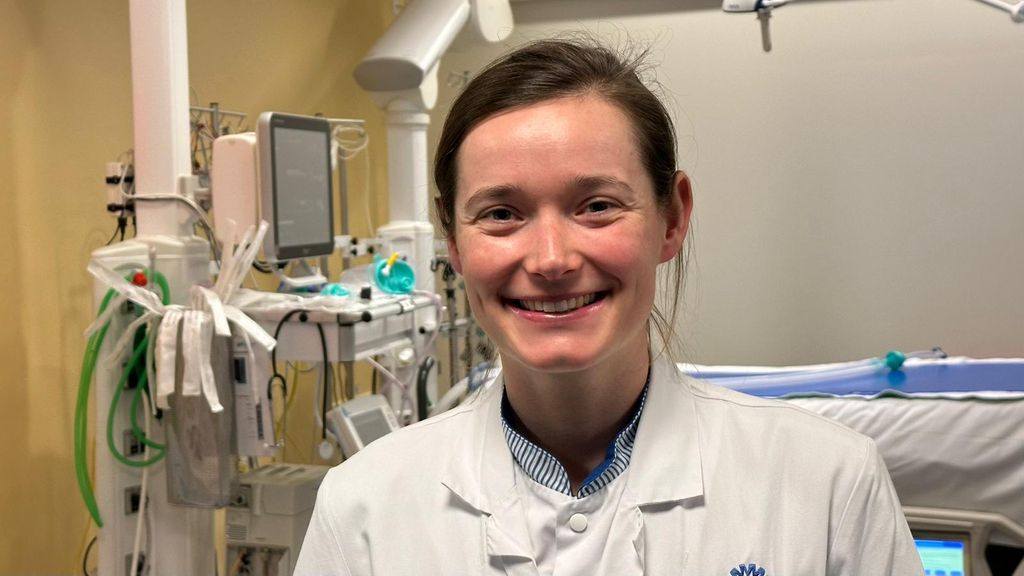
On New Year’s Eve, intensive care physician Eline Cox attends to patients at UMC Utrecht while preparing to compete in the Dutch marathon skating championship the following day with her all-medical team.
NOS, a news outlet from the Netherlands, reports on this unique combination of demanding medical work and elite sports.
At UMC Utrecht’s intensive care unit on December 31, 28-year-old doctor Eline Cox carefully monitors her pager amid the busy hours preceding midnight. Old Year’s Eve is traditionally a challenging day for hospitals, with an increased number of accidents caused by icy conditions and serious injuries related to fireworks or carbidschieten. Despite the unpredictable workload, Cox is already looking ahead to the next day, when she will compete at the Dutch national marathon skating championship in Thialf. She is relieved not to have an overnight shift, allowing her to focus on racing with her team, Schaatsteam Turner.
The team, consisting of four female medical professionals including Cox, is regarded as unique due to their balancing of demanding healthcare careers with competitive skating. Cox, alongside team members Iza Stekelenburg (oncological surgery), Judith Krabbenborg (cardiology and pulmonology), and Manon Gremmen (neuromuscular diseases), all manage dual roles in medicine and sport. Their fifth member, Janet Beers, serves as reserve and is working an emergency department shift during the championship, underscoring the intersection of medical duty and athletic commitment. Because of their backgrounds, they have earned the nickname “the skating doctors.”
The Dutch national marathon skating championships will be broadcast live on January 1 starting at 13:55 CET on NPO 1, with streaming available via NOS’s website and apps. The women’s race, covering 100 laps, will start at 14:00, followed by the men’s 150-lap race at 15:25. Cox recounts that the team members met during medical studies and shared challenges in combining high-level skating with demanding careers. Traditional training schedules at Thialf during the day often conflicted with hospital shifts, leading them to create their own skating team where they could prioritize both aspirations.
Following a training session at the Weissensee lake in Austria, known for hosting the Alternative Elfstedentocht, the athletes discussed how to continue competing on natural ice while advancing in their medical professions. With support from a medical sector consultancy sponsor, they established their marathon team to demonstrate that professional healthcare careers and high-level sports can coexist.
Balancing night duties and training requires careful scheduling and teamwork. Cox explains how colleagues cover her shifts to accommodate races, reflecting the solidarity found both in hospital teams and on the ice. Training sessions are often held early in the morning or between shifts. The team emphasizes that physical activity helps sustain mental resilience needed for their healthcare roles, aiming to inspire patients and fellow staff to recognize the health benefits of sport.
For Cox, natural ice skating holds personal significance; her mother participated in the last official Elfstedentocht in 1997, while pregnant with her. She humorously notes that her first Elfstedentocht experience was in utero. Nonetheless, the immediate priority remains the demanding emergency care provided on New Year’s Eve, where severe cases frequently involve injuries from fireworks explosions, as well as intoxication related to alcohol and drugs during holiday celebrations.