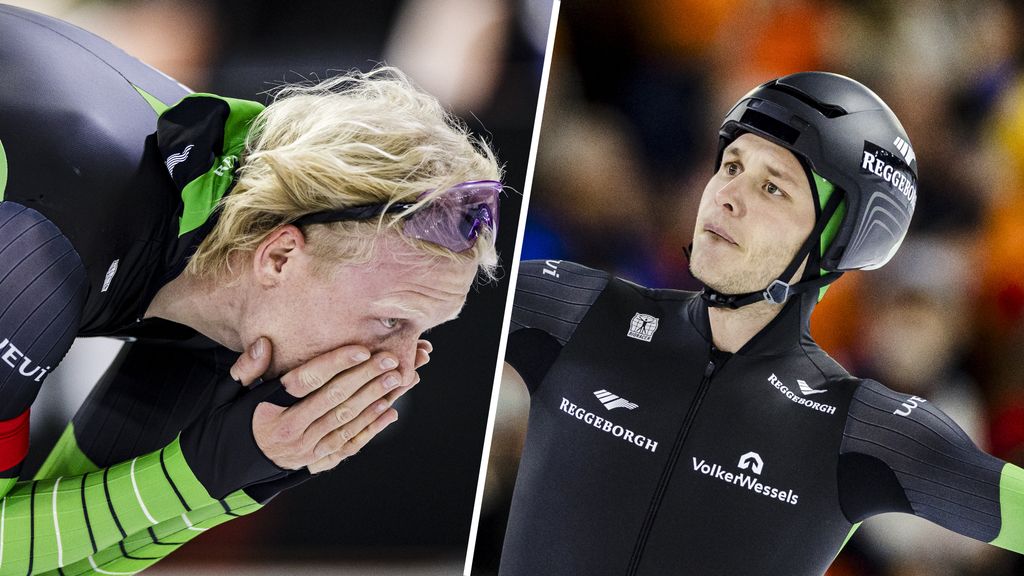
The Dutch skating federation (KNSB) has chosen Marcel Bosker for the team pursuit event at the Milan competition, a decision that has sparked questions as Tim Prins, who ranked higher on the Olympic matrix, was not selected.
NOS Schaatsen, the Netherlands
The KNSB decided to appoint Marcel Bosker instead of Tim Prins for the team pursuit discipline, despite Prins finishing above Bosker in the Olympic qualification standings. Prins secured his place among the top nine skaters with a third-place finish in the 1,500 meters at the Olympic qualification tournament. The distinguishing factor, according to KNSB technical director Remy de Wit, was the federation’s assessment that the team pursuit offered a greater medal chance than Prins’s individual event placement.
De Wit explained the choice was based on international data from the past eighteen months, suggesting that a third place in the 1,500 meters generally corresponds with a lower probability of medaling, independent of the skater. He noted that Dutch sentiment often undervalues the team pursuit event, but the KNSB prioritizes medal prospects over popularity.
The decision has faced criticism from former skater and analyst Erben Wennemars, who argued that the assessment overemphasized data models rather than actual race performances. He stated that all top three qualifiers at the Olympic qualification tournament showed potential for medals at the actual Games.
The team pursuit itself remains a subject of debate in the Netherlands, with recurring criticism regarding the strategies used and the selection of athletes for the event. Wennemars commented on the challenges posed by prioritizing team events over individual athletes, who may sacrifice personal opportunities for the team. The current team for Milan includes Bosker, Chris Huizinga, and Stijn van de Bunt, the latter having qualified as a surprise during the tournament. Bosker acknowledged the need for intensive training and cooperation ahead of the event, highlighting that the entire team, including coaching staff, must collaborate closely.
Notably, team coach Rintje Ritsma had expressed previous doubts about Bosker’s abilities in the team pursuit, particularly his technique in corners, but the KNSB now recognizes improvements and Bosker’s commitment. De Wit described the selection process as difficult and emotionally taxing, emphasizing the impact on those affected. After informing Prins of the decision, De Wit noted that Prins was emotional, expressing understandable disappointment and frustration.
Prins, who will not compete at the Milan Games, shared a brief statement on social media acknowledging the emotional difficulty and the need to postpone his Olympic ambitions. He reflected on narrowly missing qualification in another event and expressed acceptance of the current outcome.
Bosker expressed sympathy for Prins, calling it a difficult situation and acknowledging Prins’s dedication to the sport. Wennemars underscored that Bosker should not be held responsible for the decision and praised his performance and effort.
Meanwhile, two-time Olympic champion Kjeld Nuis will take Prins’s place in the 1,500-meter event. De Wit clarified that this was not a tactical move to include Nuis but a consequence of the decision to assign Bosker to the team pursuit.