Bart Swings, the reigning Olympic champion, offers an in-depth explanation of the speed skating mass start event, highlighting its unique tactical challenges ahead of the Milano Cortina 2026 Winter Olympics.
Olympics.com, an international Olympic news platform, provides this exclusive interview with the Belgian athlete.
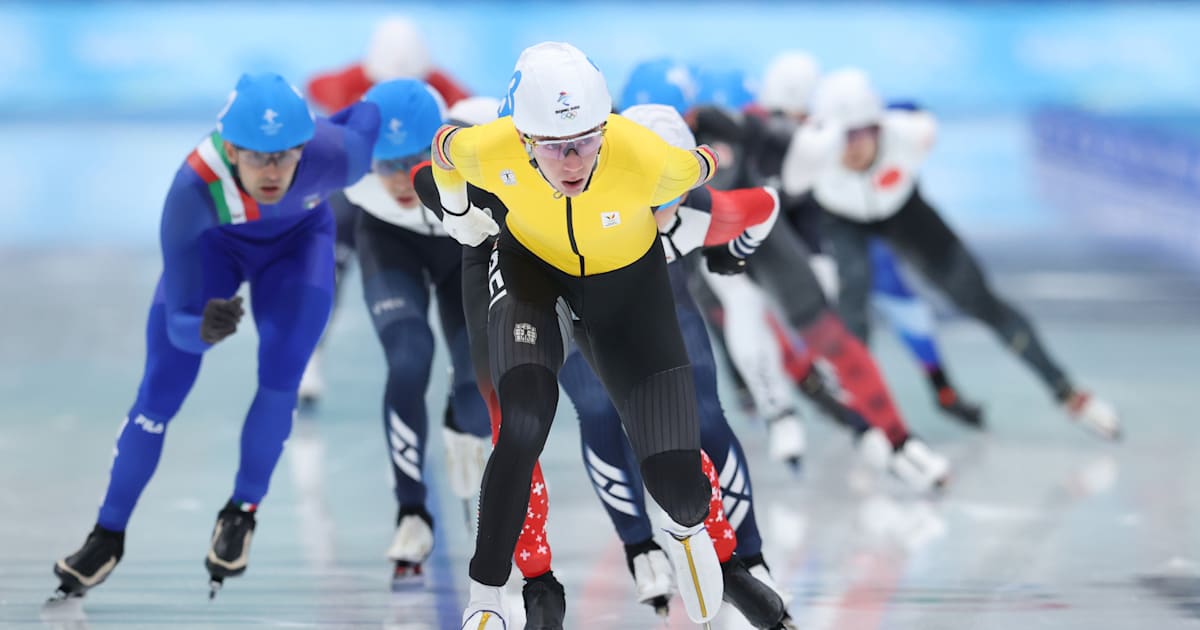
Belgium’s Bart Swings, with his extensive accomplishments including Olympic gold in Beijing 2022, multiple world and European titles, and World Cup victories, detailed the mass start race format. Unlike traditional long track races, the mass start involves all competitors starting simultaneously, with 16 to 24 skaters racing 16 laps. The winner is the first to cross the finish line, with medals awarded to the top three skaters. Despite the straightforward finishing rule, the key to success lies in the complex tactics used throughout the race.
The race begins with a ‘rolling lap,’ where competitors start slowly to establish position before the official race start. Skaters must strategically manage pace and energy within the pack, preparing for intermediate sprints every four laps that offer points influencing semifinal qualification and final rankings. The ability to sprint efficiently after a sustained effort is vital, particularly as the race typically concludes with an intense sprint in the final lap. A wide variety of skaters compete due to the 6.4-kilometer distance, creating diverse and unpredictable contests.
Swings emphasized that the mass start involves a balance between cooperation and competition. Skaters often draft behind others to conserve energy and may even maintain physical contact. Despite striving for individual victory, athletes must navigate relationships and tactics with rivals, sometimes resulting in disputes resolved through sportsmanship after the race. Teamwork can also play a role when teammates qualify for the final, enabling coordinated strategies to improve medal chances.
The event involves considerable psychological elements, such as bluffing and mind games, with athletes and coaches analyzing opponents’ habits and race scenarios well in advance. Swings noted that, despite the high stakes, Olympic finals tend to be clean races without excessive aggression. Looking forward to Milano Cortina 2026, he aims to employ tactical restraint and psychological approaches shaped by his experience and recent injury management, focusing on selective challenges during World Cup competitions and aiming to defend his titles effectively.
Prior to the Olympics, Swings plans to compete at the European Speed Skating Championships in Tomaszów Mazowiecki, Poland, to prepare and maintain his competitive edge in this tactically demanding discipline.