Sander Eitrem set a new world record in the 5000-meter speed skating event by completing the distance in under six minutes, a first in the sport’s history. The achievement took place at the Max Aicher Arena in Inzell just weeks ahead of the Winter Olympics in Milan.
NOS, Netherlands
The event occurred near the end of the day’s competition, where a growing crowd observed Eitrem’s remarkably fast lap times early in his race. Coaches and fellow skaters gathered to witness the Norwegian athlete’s performance, which culminated in a time of 5:58.52. This was an unprecedented feat, breaking the longstanding six-minute barrier on the 5000-meter distance.
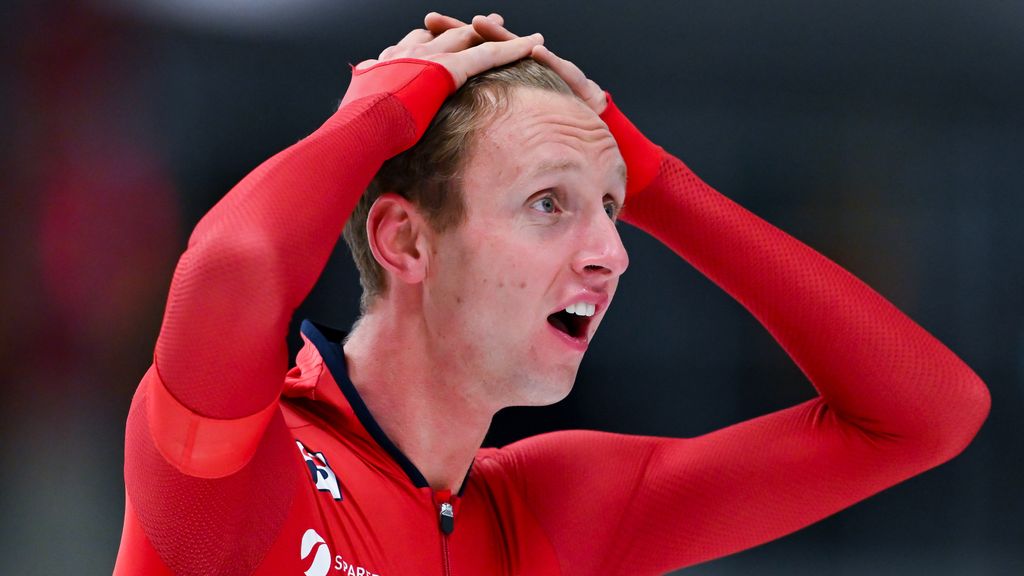
Eitrem’s achievement prompted strong emotional responses from coaches and the crowd. Norwegian coach Edel Therese Høiseth was reportedly moved to tears, and Dutch coach Bjarne Rykkje, who works with the Norwegian team, expressed disbelief, calling the performance “not normal” despite recognizing Eitrem’s peak physical condition. Following the race, Eitrem expressed his astonishment, stating that breaking the six-minute mark was a childhood dream now realized.
According to Rykkje, the record did not come entirely unexpectedly. He noted Eitrem’s enthusiasm after learning his pairing before the race and highlighted the skater’s strong preparation through continuous training since the December World Cup event in Hamar, including skipping the European Championships to focus on conditioning for the Olympics. Rykkje identified the weekend’s competition in Inzell as the conclusion of this training phase.
Inzell’s significance is further underscored by the fact that it has not hosted a world record-setting race in 40 years. Speed skating analyst Mark Tuitert commented on the historical importance, noting that the six-minute barrier had been a long-discussed milestone since the era of Sven Kramer and Nils van der Poel, yet unattained until Eitrem’s performance.
Tuitert described Eitrem’s race as “brilliant,” with the athlete establishing an unassailable lead early on. The analyst suggested the timing of the performance correlates with the winter athletes’ rising form ahead of the Olympic Games starting in February, where the 5000-meter event is scheduled in the opening weekend.
Technically, Eitrem’s race was notable for his use of a skating posture with his arms positioned behind his back through the curves, a technique increasingly adopted by long-distance skaters but new to international competition for him. Rykkje reported that this strategy had yielded a track record for Eitrem in the 3000 meters at Hamar, although that distance is not contested by men in official events. Rykkje attributed Eitrem’s mastery of this technique as a key factor contributing to the world record.
Despite the celebration, Rykkje emphasized the need for Eitrem to maintain focus following the record-setting race. Eitrem himself acknowledged needing a few days to process the achievement. Many athletes view the current World Cup event as a preparatory test rather than a peak performance prior to the Olympics.
The world record was particularly meaningful for Eitrem, a personal and professional milestone that gains additional significance since it was achieved at a low-altitude rink rather than the high-altitude tracks that have traditionally been more conducive to record times. Rykkje highlighted this aspect as enhancing the exceptional nature of the accomplishment.