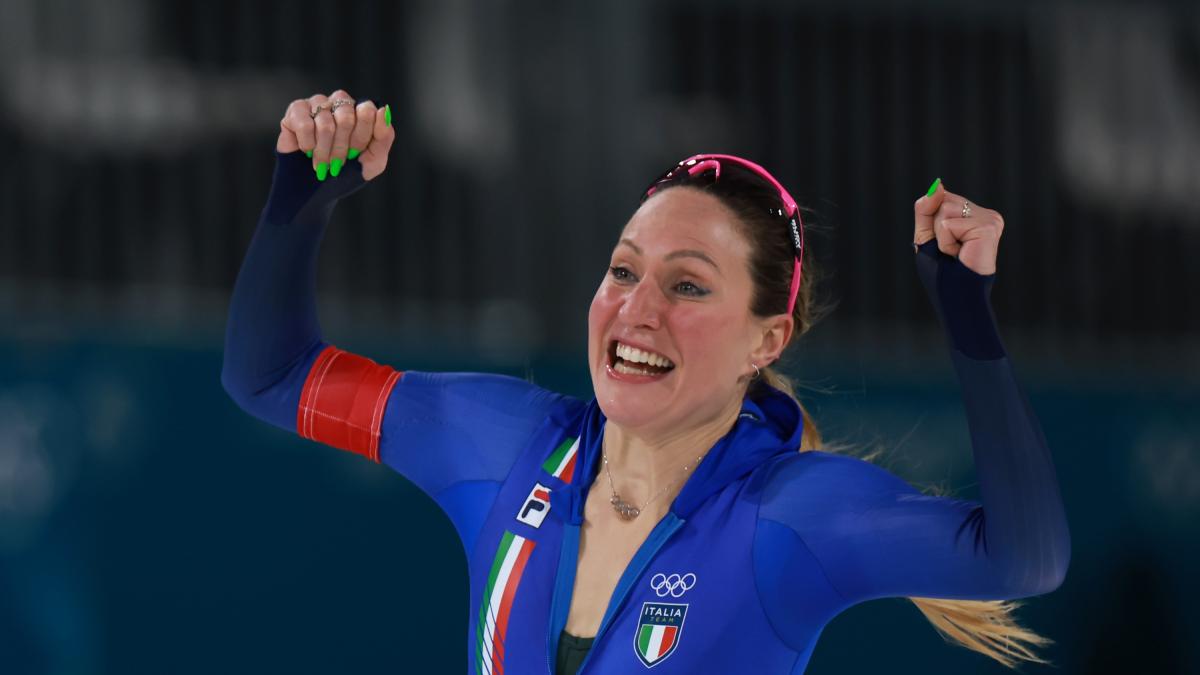
Francesca Lollobrigida secured her first Olympic gold in the 3000 meters speed skating event at the Milano Cortina 2026 Winter Games, marking her fourth Olympic appearance and setting a new Olympic and personal record on her 35th birthday.
Gazzetta dello Sport, an Italian sports news outlet, reports on Lollobrigida’s significant achievements and the evolution of her career.
Lollobrigida debuted at the Sochi 2014 Winter Olympics without winning a medal. She then progressed to earn a silver medal in the 3000 meters and a bronze in the mass start during the 2018 and 2022 Winter Olympics respectively. Her Olympic gold in 2026 stands out as a crowning achievement following a challenging season, during which she nearly retired due to a severe viral infection.
Her career development reflects a shift in her training philosophy marked by experience and motherhood. Since giving birth to her son Tommaso in May 2023, Lollobrigida underwent a comprehensive physical and mental recovery. She returned to competition gradually in autumn 2023, emphasizing body awareness and timing rather than rushing back, a strategy that contributed to her historic gold medal in the 5000 meters at the 2025 World Championships. This made her the first Italian woman to win a world title in long-track speed skating at this distance.
Technically, Lollobrigida excels in the 3000 meters, a race demanding a balanced approach between power and energy management. She maintains a consistent pace with measured starts and low, sustained pushing through curves. The mass start event complements her skills by requiring tactical acumen and group navigation, culminating in an expertly timed final sprint. Her combined physiological endurance and racing intelligence distinguish her as one of the most versatile athletes internationally.
Lollobrigida’s training remains rigorous but tailored more selectively than in previous years. On-ice sessions focus on sustained technical continuity with long repetitions mimicking race conditions, mixed with high-intensity shorter blocks. Off-ice, cycling develops aerobic capacity without joint strain, while gym workouts target specific muscle groups vital for skating, such as quadriceps, glutes, and the posterior chain. She prioritizes functional strength over maximum load, aiming for effective movement transfers during her skating stride.
Nutrition plays an integral role in her performance strategy. Her diet ensures balanced energy through frequent carbohydrate intake during intense training days and consistent protein distribution for recovery. Hydration management is crucial too, as fluid loss on ice can affect performance even if less noticeable. Additionally, regular mobility exercises, targeted stretching, and deep muscle strengthening help counteract the stress on hips and back caused by the bent skating position. Recovery protocols with active rest days, low-impact cross-training, and fatigue monitoring have become essential components in maintaining season-long consistency.
Mental preparedness is supported by her extensive Olympic experience, enabling her to navigate the unique challenges of the Olympic environment, including village life and competitive pressure. Beyond sport, Lollobrigida holds a master’s degree in Motor Sciences, enhancing her understanding of physiological and theoretical aspects related to athletic performance. Her knowledge informs her training approach and body management, contributing to her leadership role within the Italian national team. She is respected not only for her results but also for her methodical approach and composure during demanding moments.