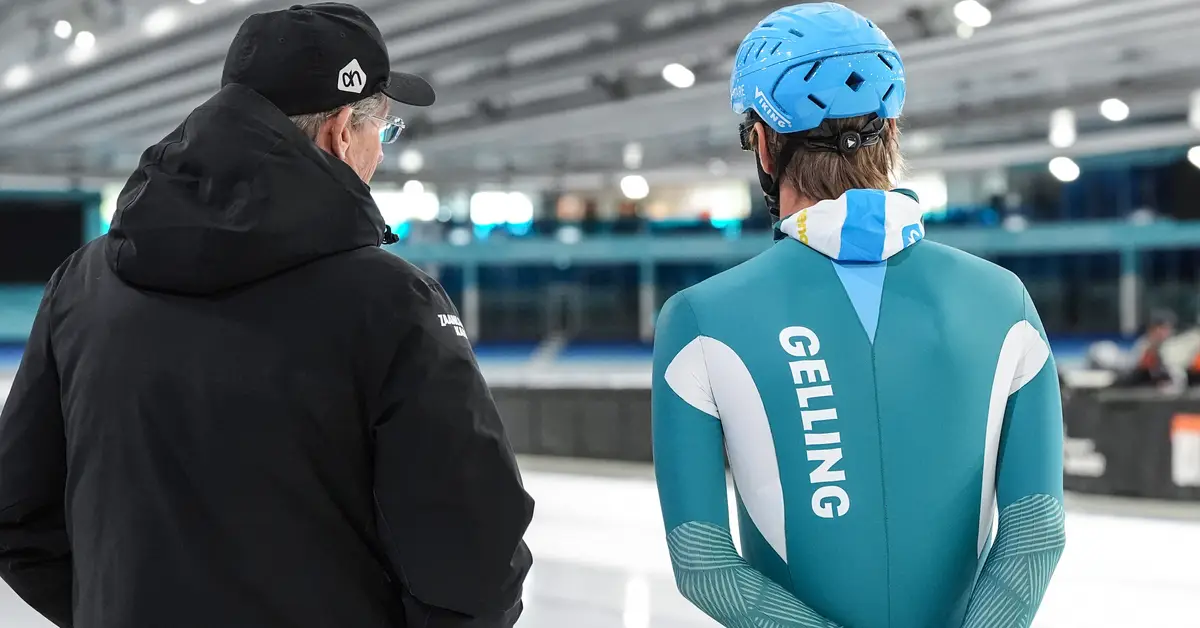
Swedish speed skater Nils van der Poel rose rapidly to international prominence with his innovative training approach and record-breaking performances, before retiring unexpectedly in 2022 and withdrawing from the public eye.
Volkskrant, published in the Netherlands, provides detailed insights into the career and legacy of Van der Poel.
Nils van der Poel emerged on the international speed skating scene in 2020 after a two-year hiatus from the sport. During his brief but remarkable comeback, he implemented an unconventional training regimen emphasizing extreme endurance and mental toughness, which led him to win multiple world titles and set new world records on the 5,000 and 10,000 meter distances. His success disrupted a domain traditionally dominated by Dutch skaters and brought renewed attention to Swedish long-track speed skating.
Van der Poel’s impact extended beyond his athletic performances. He was known for his unorthodox behaviors and sense of humor, such as encouraging competitors during races and publicly challenging established norms in the sport. Notably, after breaking the world record in the 10,000 meters in 2021, he famously addressed a camera with a playful message directed at a fellow athlete. His outspoken critiques of sporting authorities and human rights issues also raised discussions during and after the 2022 Beijing Winter Olympics.
Following his double Olympic gold in Beijing, Van der Poel again retreated from elite competition and public life. Reports suggest he changed his surname to Svensson, adopting his mother’s last name, and has since preferred to maintain anonymity. His former coach, Johan Röjler, who guided Van der Poel during his peak years, describes him as exceptionally dedicated and creative, as well as one of the few athletes who combined intense training with effective rest and recovery strategies.
Van der Poel also shared his training methods openly by publishing a detailed plan online, seeking to inspire others in endurance sports. This transparency is viewed as a significant contribution to the broader sporting community. Despite his retirement, the changes Van der Poel introduced have influenced how speed skating training is approached internationally, encouraging more solo and high-intensity workload sessions at competition pace.
In Sweden, Van der Poel is credited with revitalizing interest in long-track speed skating, a sport that had been overshadowed by hockey and bandy. His achievements earned him accolades such as the 2021 Victoriaprijs, awarded by Crown Princess Victoria for raising Sweden’s presence in winter sports. While it remains uncertain how his departure affects the sport’s future in Sweden, his legacy endures amid a more diverse and competitive international field.
Since Van der Poel’s retirement, new athletes from various countries have emerged as top contenders in the long-distance events, reflecting the increasingly global nature of the discipline. The Winter Games in Milan 2026 will showcase a broader range of nationalities competing at the highest level, a field that contrasts with the near singular dominance of Van der Poel during his peak years.