A recent analysis reveals a significant advantage for speed skaters starting in the inner lane during women’s 1000-meter races, raising questions about fairness at the Winter Olympics event.
NOS, a Dutch news outlet, reports on the findings of this study.
According to research conducted by Ruud Koning, a professor of Sport Economics at the University of Groningen, and Canadian top-level speed skater Antoine Roger, data dating back to 2007 shows that 64 percent of all women’s 1000-meter tournament winners started the race in the inner lane. This pattern indicates that the probability of winning from the inner lane is notably higher than from the outer lane, as the distribution is far from the expected 50-50 if no advantage existed.
The pair’s investigation included all randomized lane assignments in women’s 1000-meter speed skating events since 2007. Additionally, their data indicates that 57 percent of individual heats are won by the skater starting in the inner lane. Despite these statistics being presented multiple times to the International Skating Union (ISU), no official response has been provided to date.
Ruud Koning expressed that while the findings do not constitute an immediate crisis for the sport, they do highlight that the women’s 1000-meter event may not be completely fair. Yet, he emphasized that athletes should focus on delivering their best performance regardless of starting position. Ireen Wüst, the Netherlands’ most successful Olympian with thirteen medals, acknowledged the advantage of starting in the inner lane, noting it often results in a time difference of one or two-tenths of a second based on her racing experience.
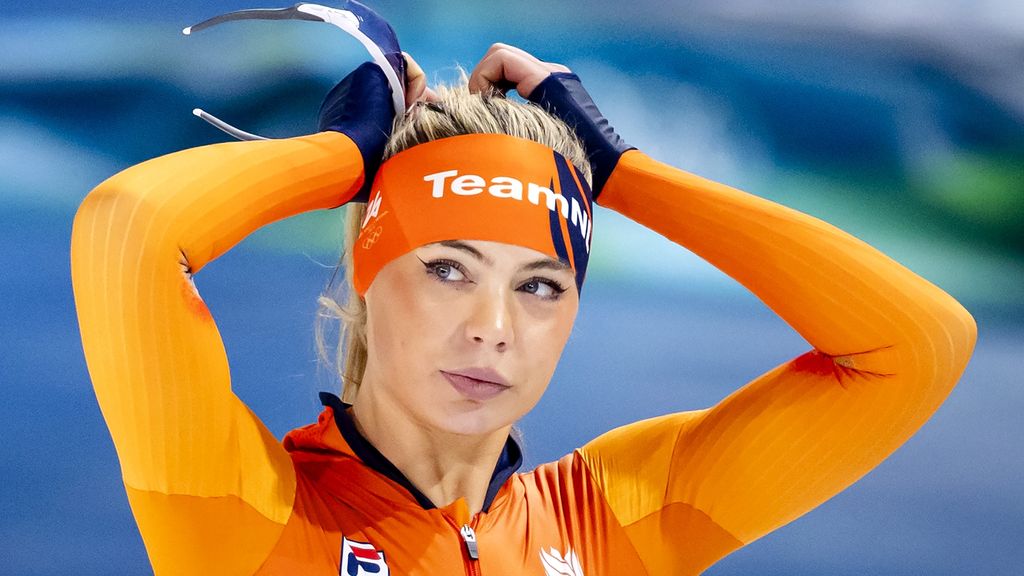
The race scheduled today at 17:30 local time features the Dutch skaters Jutta Leerdam, Femke Kok, and Suzanne Schulting, all drawn to start in the outer lane, placing them at a clear disadvantage according to the study. Wüst also commented on the gender differences concerning lane preference, explaining that women generally benefit more from inner lane starts, while men often prefer the outer lane due to their higher speeds and handling of curves.
The mechanics behind the lane advantage involve the sequence and length of inner and outer curves skated. The inner lane starter completes three inner bends and two outer bends, while the outer lane starter does the opposite. Despite the outer lane skater starting five to ten meters ahead to equalize distance, the inner lane skater has a greater opportunity to accelerate before curves, which can influence overall speed and performance.
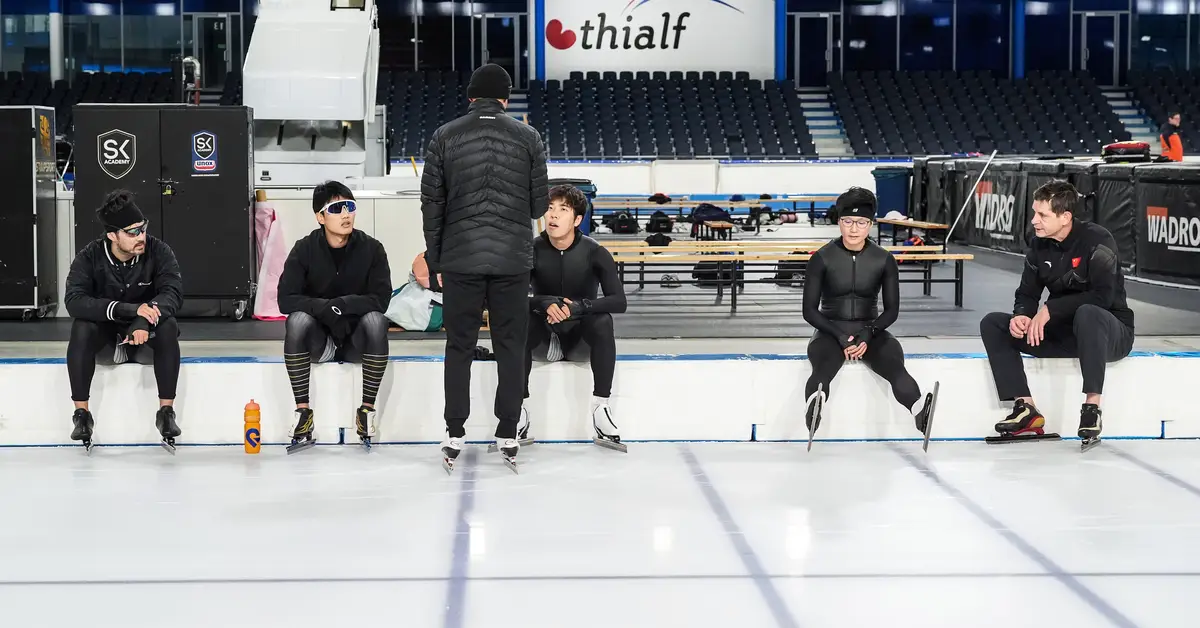
Inge Stoter, head of the Innovation Lab at Thialf skating arena, suggested that faster speeds entering the first curve are critical, implying that the inner lane offers a strategic advantage because of the distance skaters have to accelerate before curves. The inner lane also grants an advantage at the final crossover and the last inner bend, further benefiting skaters starting there.
Antoine Roger is particularly interested in the results of tonight’s competition, as his partner Béatrice Lamarche, competing for Canada, has been assigned the outer lane. Although aware of the research findings, Roger has opted not to discuss them with Lamarche to avoid distracting her from her performance.