Former speed skater and neuroscientist Beorn Nijenhuis highlights the ongoing experimentation in ice skating technique, particularly focusing on the practice of skating with both hands behind the back and its potential effects on speed and efficiency.
NOS, a Dutch public broadcasting organization, presents insights into the biomechanics and cultural challenges surrounding this skating style.
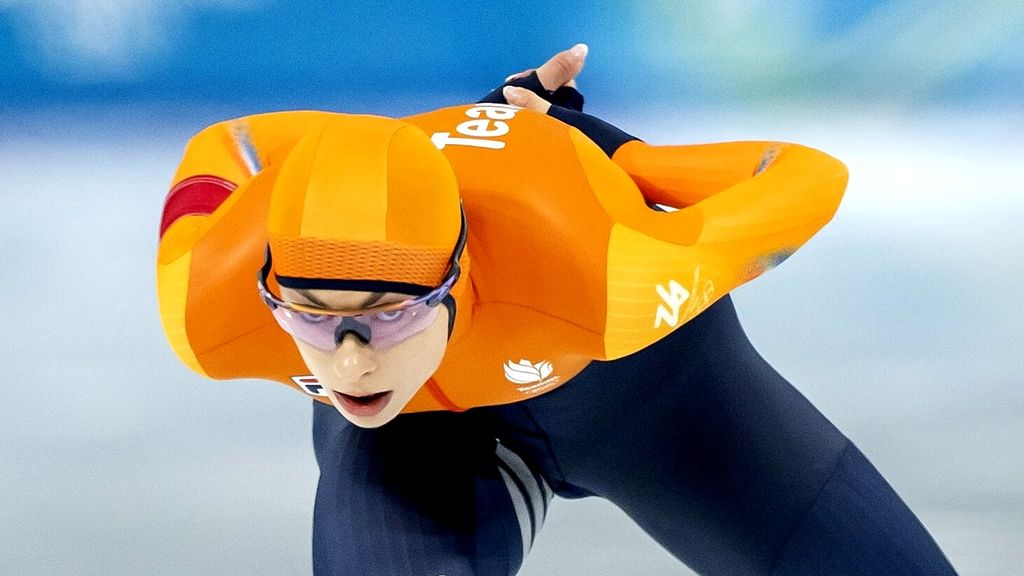
Nijenhuis points out that the advantage of skating with both hands on the back is visible on straight segments of the track, as demonstrated by recent performances such as Davide Ghiotto’s 10,000-meter world record and Sander Eitrem breaking six minutes on the 5,000 meters. However, he stresses that scientific evidence supporting benefits in cornering remains absent. He suggests that current skating practices involve trial and error, with athletes often exploring different techniques without concrete biomechanical validation.
He questions the logic behind not experimenting with variations, such as keeping the left arm partially on the back during curves, proposing that this might reduce air pressure behind the body similarly to drafting effects seen in cycling. This could potentially enhance stability and speed during turns. Despite these hypotheses, Nijenhuis emphasizes the lack of biomechanical data to confirm such benefits.
Reflecting on the historical development of skating equipment and technique, Nijenhuis notes that unlike earlier innovations like the clap skate which were developed through thorough biomechanical research, the current trend involves more speculative experimentation. He compares this exploratory phase to the early scientific revolutions where trial and error played a significant role, suggesting that discoveries in speed skating may likewise result from practical experimentation rather than purely theoretical knowledge.
The former athlete also discusses potential future developments in racing strategies, such as when to place both hands behind the back in middle-distance events to maintain top speed and reduce fatigue. He anticipates changes particularly in the 1,000 and 1,500-meter races, with the possibility of more varied techniques emerging among sprinters. Yet, he acknowledges that the conservative nature of the sport and the risks involved in deviating from established training regimens may hinder rapid adoption of new methods.
Overall, Nijenhuis characterizes the search for the optimal skating technique as a balance between innovation and tradition, highlighting that breakthroughs in speed skating are rare due to the high stakes and fine margins at the elite level. He remains optimistic about the potential for further discoveries in the sport.