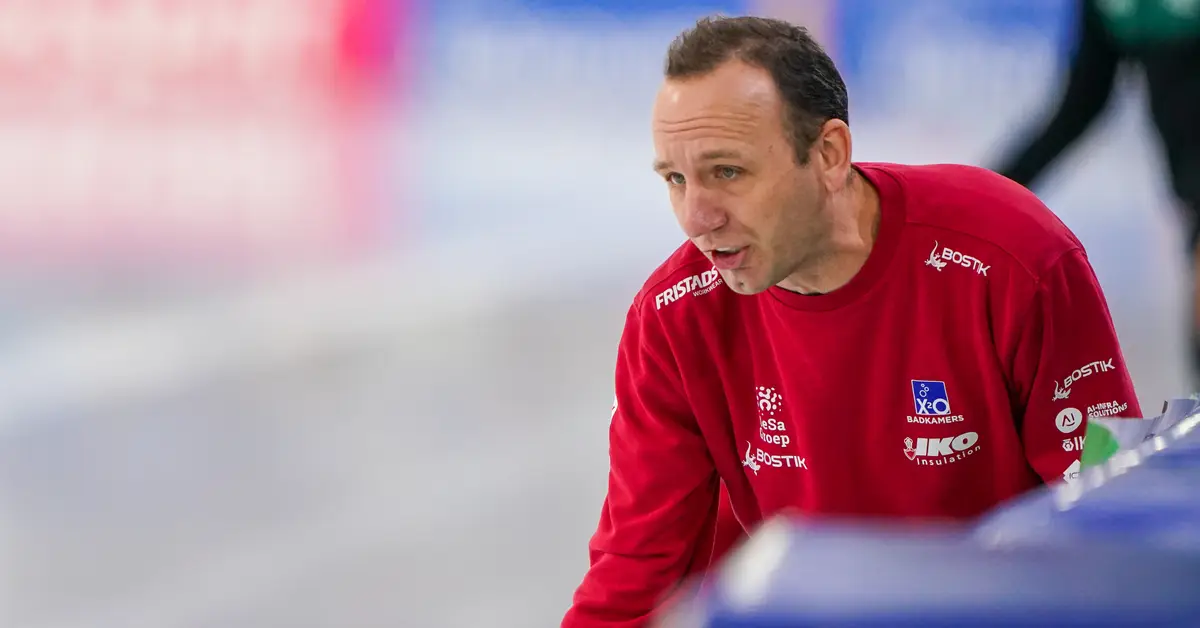
Johan de Wit, coach of Team Gold, shared his perspectives on the recent Olympic Qualification Tournament (OKT), discussing the surprises and challenges faced by Dutch skaters as well as his own athletes.
Telegraaf, Netherlands
Johan de Wit closely followed the OKT from Japan and the Netherlands, expressing his astonishment at the tournament’s outcomes. He described the event as intense and highlighted the emotional and unexpected moments that dominated discussions among skaters and coaches both domestically and abroad.
One major point De Wit addressed was the failure of Joy Beune, reigning world champion at 1500 meters, to qualify for the Olympics in that distance. He found it difficult to accept this result, stating that Beune should have been pre-selected considering her dominance over the last two years. De Wit empathized with Beune, noting her emotional interview and acknowledging the bittersweet nature of her missing out, especially as other competitors achieved times she had never attained on this track.
De Wit also spoke about his athlete Miho Takagi, a six-time Olympic medalist from Japan who had been preparing to compete against Beune. Contrary to what some might expect, he said neither Takagi nor his team celebrated Beune’s absence. On the contrary, they found it surprising and unfortunate, as Takagi had hoped to challenge one of her strongest rivals at the Games.
The coach further observed the impact of incidents during the OKT, such as falls by Jutta Leerdam and subsequent races affected by interruptions. He noted that these disruptions likely influenced the performances and possibly the final selections, emphasizing the various unpredictable factors athletes contend with in qualification events.
While acknowledging these difficulties, De Wit praised the strong performances of other Dutch skaters, notably the Team Albert Heijn-Zaanlander women, including Merel Conijn, whom he believes has potential for Olympic success on the five-kilometer distance. He drew attention to the mental resilience characteristic of athletes from her hometown.
Turning to the men’s side, De Wit was impressed by Stijn van de Bunt’s qualification and expressed curiosity about how he would perform at the Olympics given the challenges of competing outside familiar venues. He also remarked on Joep Wennemars’s successful acquisition of three Olympic spots but was puzzled by Wennemars’s critical comments about Kjeld Nuis, another qualified skater who missed the 1500 meters and lost the final spot to Tim Prins.
De Wit hopes Nuis might still defend his Olympic title in the 1500 meters, possibly through strategic adjustments such as ticket exchanges with Prins. He criticized the potential decision to replace Prins in the team pursuit with Marcel Bosker, calling such a move short-sighted. Instead, he suggested Beau Snellink would be a more suitable candidate for the team pursuit given his prior experience, even though his individual performance was less strong.
Concerning the Dutch men’s chances in the team pursuit, De Wit remains realistic, considering the competition formidable and suggesting that the Dutch team may not be a leading contender if all teams are at full strength. He expressed confidence that the national skating federation can make impartial decisions based on this evaluation.
Reflecting on his own team’s performance, De Wit reported that all but one of his athletes had qualified successfully during the OKT held in Japan. He expressed pride and optimism about their prospects for the upcoming Olympic Games.
After eleven years coaching in Japan, De Wit announced he will step down from his role with Team Gold following this season and return to the Netherlands. He described bidding farewell to Nagano as a significant and somewhat emotional moment, viewing the Olympics as a fitting conclusion to his time with the team.