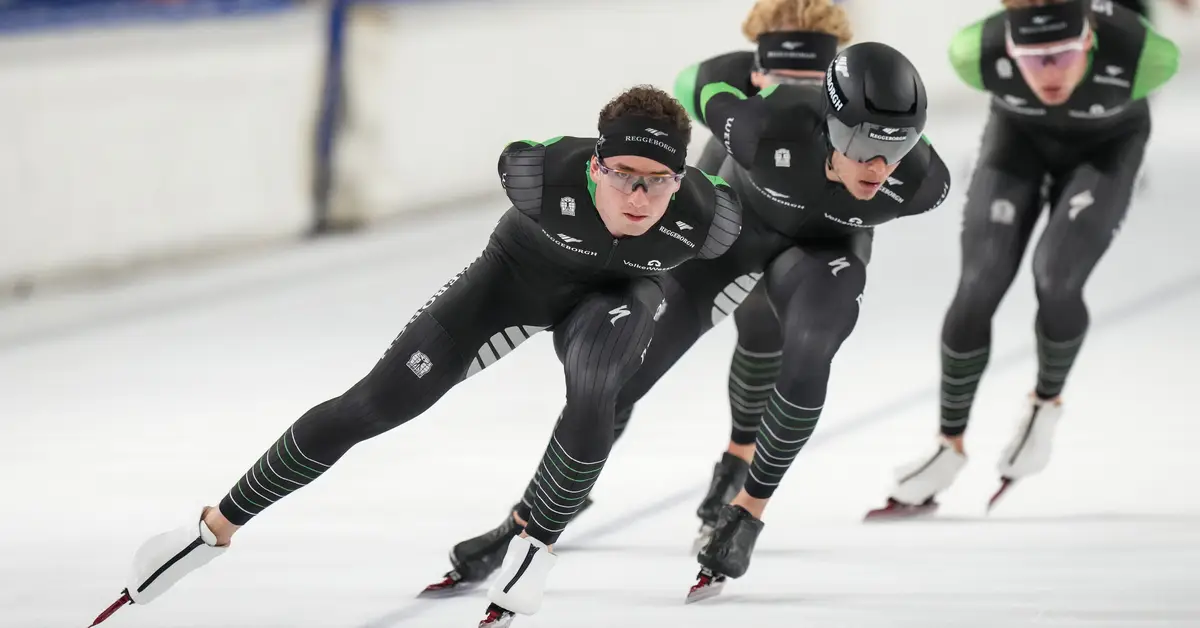
The 1,500-meter speed skating race is known for its intense physical demands, often causing athletes to experience extreme exhaustion and requiring a combination of endurance, technique, and mental strength.
NOS, a Dutch news outlet, provides an in-depth look at the challenges faced by competitors in this event.
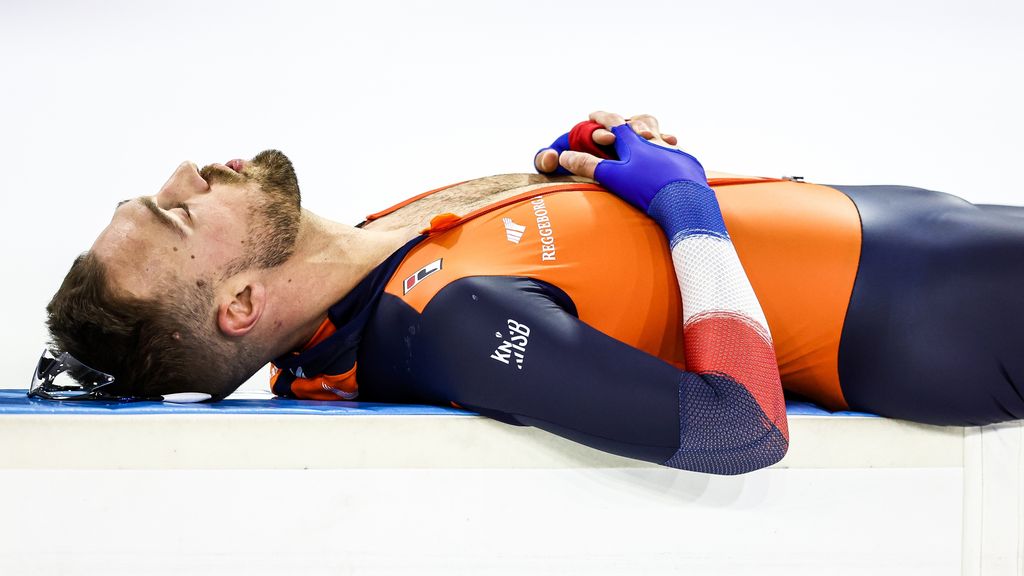
The 1,500 meters in speed skating is often referred to as a ‘long sprint’ and is considered one of the most demanding distances. It requires athletes to push their physical limits, balancing the need for speed with endurance and technical proficiency. Skaters experience oxygen deprivation that can lead to dizziness, narrowing of the field of vision, and extreme muscle fatigue. Kjeld Nuis, the 36-year-old reigning Olympic champion in this distance, explains that the body is subjected to significant strain, which may result in sensations such as blacking out and other physical side effects.
According to Mark Tuitert, the 2010 Olympic champion in the 1,500 meters, the race demands both physical and mental resilience. Skaters start the race at a very high intensity but cannot maintain full sprint pace throughout. The human body’s ability to sustain that effort lasts approximately 45 seconds, after which athletes must endure the pain while maintaining focus for the remaining distance. This combination of physical discomfort and mental concentration defines the unique challenge of the event.
The race brings together sprinters and middle- to long-distance skaters, creating a tactical competition where different strategies can be employed. Sprinters face particular challenges in maintaining speed in the final 500 meters, as the lactic acid buildup limits their ability to continue at maximum intensity. Nuis highlights that the race is a third longer than the 1,000 meters, which significantly impacts how athletes approach it.
Mark Tuitert elaborates on the physiological aspects, explaining the energy systems involved during the 1,500 meters. Half of the race is performed using aerobic metabolism, which can be sustained for longer periods, while the other half depends on anaerobic metabolism, which allows high intensity but only for a short duration. This balance makes the distance difficult to train for, as sprinters need to develop endurance without losing speed, and long-distance skaters must gain speed without sacrificing stamina.
The mental aspect of the race is equally important, as skaters must contend with the anticipation of intense discomfort. Many athletes unconsciously hold back to manage pain, but this can compromise their performance. Training, natural ability, and courage also contribute to success on this distance. Currently, American skater Jordan Stolz is the favorite, known for his ability to accelerate powerfully in the final lap, a quality that Nuis acknowledges as exceptional.
The physical toll of the 1,500 meters is evident, as demonstrated by Stolz’s incident where he vomited after a World Cup race in Inzell. Tuitert notes that the race requires extraordinary concentration, as the body signals to stop and pain intensifies. Nuis describes additional symptoms such as seeing black spots, dizziness, and fatigue so severe that simple tasks become difficult. Recovery immediately after the race involves careful management to aid the body’s cleanup processes rather than resting abruptly.
Despite the hardships, athletes find the 1,500 meters rewarding when they perform well. Nuis emphasizes that the event is a ‘beautiful distance’ when everything comes together, balancing speed, stamina, and strategy to achieve top results.