The Dutch Skating Federation’s recent decision regarding the team pursuit selection has drawn criticism, echoing concerns from four years ago related to Olympic choices.
Telegraaf, a news outlet in the Netherlands, reported on the issue.
The selection committee of the Dutch skating federation (KNSB) has been criticised for repeating a past mistake made during the Winter Olympics four years ago. At that time, promising skater Tijmen Snel was overlooked in favour of established team pursuit skaters Marcel Bosker and Sven Kramer, who was considered past his prime. This decision contributed to the Dutch team finishing a disappointing fourth place in the team pursuit at the Beijing Olympics.
As the 25th Winter Games approach, the KNSB selectors have once again rated the medal prospects of the team pursuit higher than those of Tim Prins in the middle-distance events. This has been seen as a repeated misjudgement, with concerns that the same error is being made by favouring the team pursuit competitors over up-and-coming talent.
Under the guidance of coach Rintje Ritsma, the men’s team has shown modest improvement in recent World Cup events but still falls short when compared to dominant teams such as the United States and Italy. The team avoided relegation to the B-group mainly because the leading Italian team suffered a fall during the first World Cup of the season in Salt Lake City.
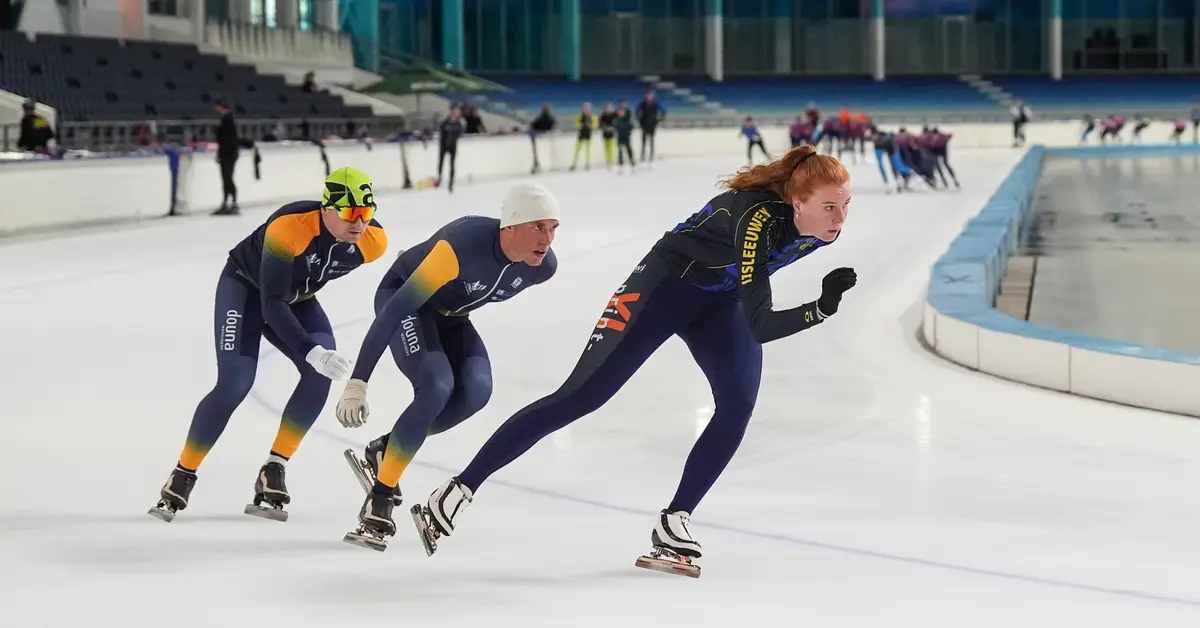
During later World Cup weekends, the Dutch trio – Chris Huizinga, Beau Snellink and Marcel Bosker – experimented with changing race positions. Huizinga struggled to set the pace initially, leading to position swaps in Calgary where Bosker took the lead before Huizinga resumed it. These changes resulted in third-place finishes in Canada and Norway, though some key competitors were affected by falls or underperformance.
The team pursuit training in the Netherlands faces challenges as many skaters have individual commitments with their commercial teams, making it difficult for the national coach to assemble his preferred squad regularly. Adding to the difficulties, Beau Snellink has withdrawn, leading to the inclusion of the inexperienced Stijn van de Bunt, who is yet to integrate fully with the team and coaching staff.
Given these factors, the team’s cohesion and readiness are uncertain, making the high expectations placed on the new lineup by the selection committee somewhat surprising, especially when compared to Tim Prins, who currently ranks fifth in the World Cup standings for the 1500 metres and is close to podium finishes. Although gold may have been unlikely due to strong rivals like Jordan Stolz, Prins’ experience in Milan was seen as valuable for his development ahead of future Games.
The KNSB seems to favor Marcel Bosker’s potential influence on the team pursuit despite past controversies, which had previously seen promising skater Tijmen Snel sidelined. Critics argue that this repeated decision could prove costly for the federation once again.