Team Duurzaam IJs, a consortium including the KNSB, Essent, and Daikin, is working to make all artificial ice rinks in the Netherlands more sustainable to ensure they remain available for future generations.
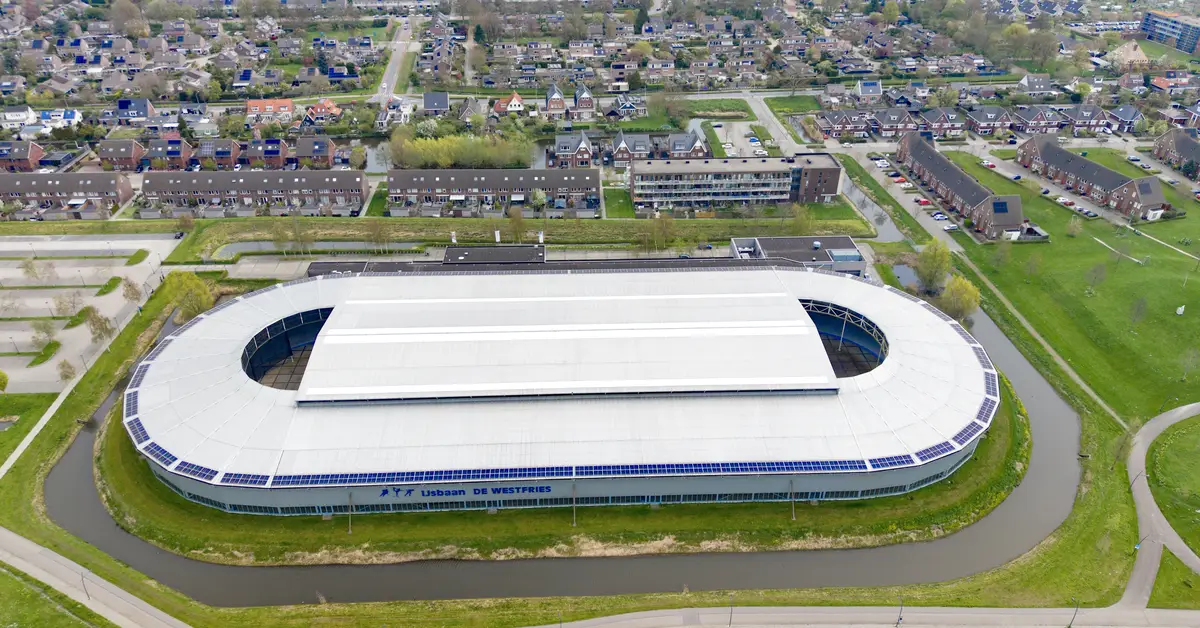
According to Schaatsen.nl, a Dutch skating news outlet, Hoorn is the first ice rink where the initiative has been implemented. The efforts and results seen in Hoorn are intended to serve as a model for other rinks across the country.
The approach evaluated several scenarios, all of which keep the existing 400-meter track and 30×60-meter inner rink intact. A key goal is replacing natural gas with green electricity, partly generated on-site. Additionally, the thermal energy produced during ice-making, which currently dissipates into the air, will be reused for heating buildings.
In the first scenario, the rink is improved through better insulation, installation of wind catchers in the roof openings, replacement of inflatable boarding with cushions, addition of solar panels with battery storage, and reduction of heating for mop water. This scenario allows approximately 15% of the residual heat to be reused.
The second scenario builds on the first by adding an extra ice surface of 25×40 meters on the central area, relieving congestion on the larger rink. It also creates space for additional facilities such as wellness and physiotherapy rooms, enabling about 30% of the residual heat to be recovered.
The third and most comprehensive scenario incorporates the measures from the earlier options and involves sharing the recovered energy with the surrounding neighborhood. By exchanging all the heat generated through ice cooling with nearby buildings, the rink would become an energy hub within the community.
Costs vary depending on the selected options. While a detailed cost analysis will follow, initial estimates place the one-time investment between 3 and 10 million euros. Operational savings are expected to recoup these costs within a maximum of 10.5 years in all scenarios.